Keep the silhouette readable
Visible: Broad wings and tall ears carry the outline.
Sample question: Do those features stay recognizable from the front, side and back in the intended pose?
Materials, details and practical trade-offs
Understand what changes the look, what needs a sample, and which choices to discuss before paid development. You do not need to know factory terminology.
Read the details in an existing product
These three photos show a fantasy bat from the same reference product group. We use visible features to explain development decisions, not to claim a Kinhatch client project or a documented before-and-after result.
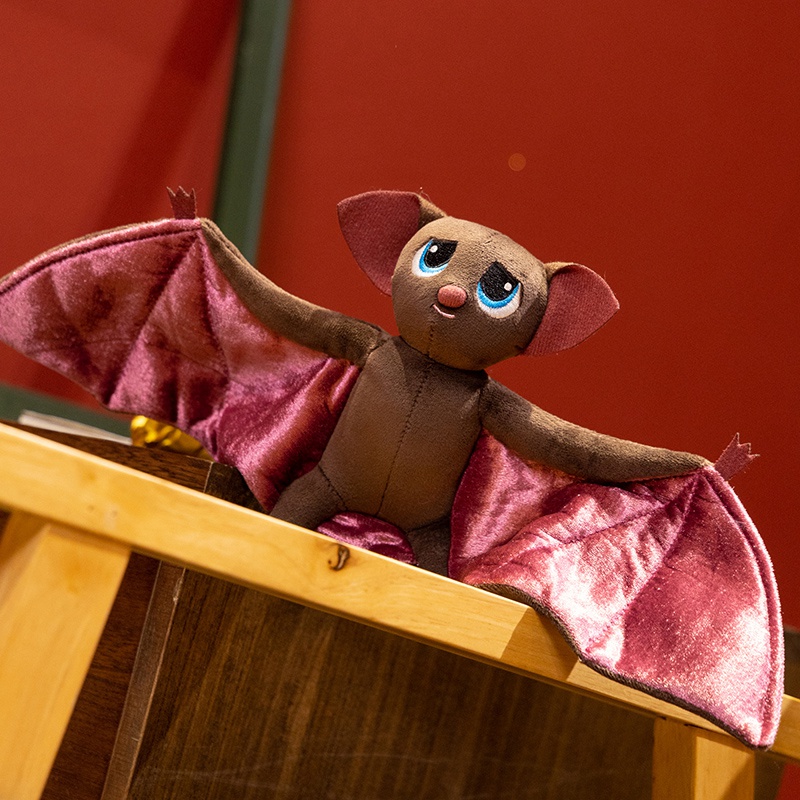
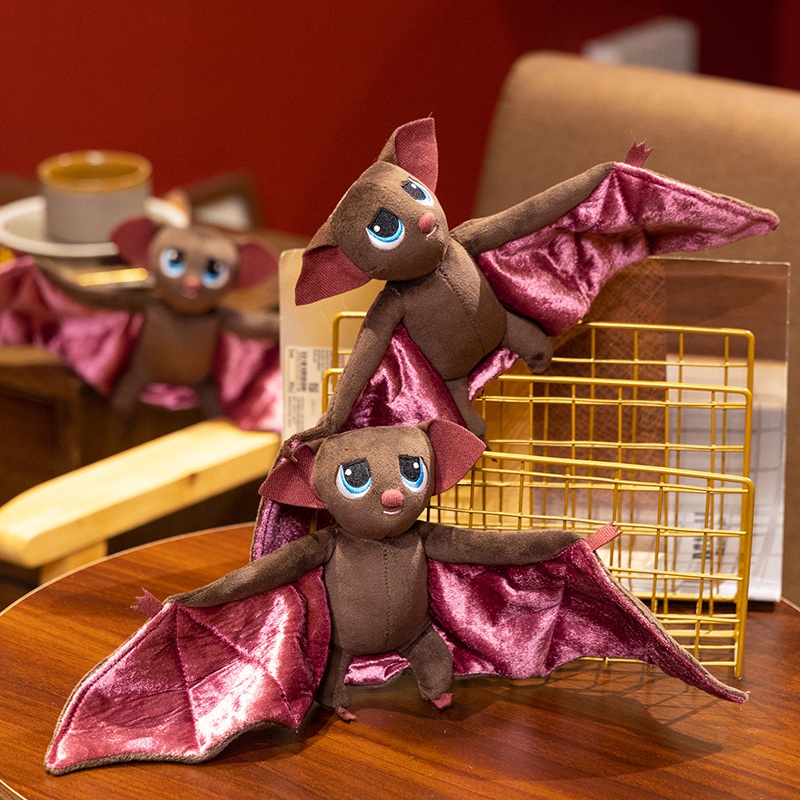
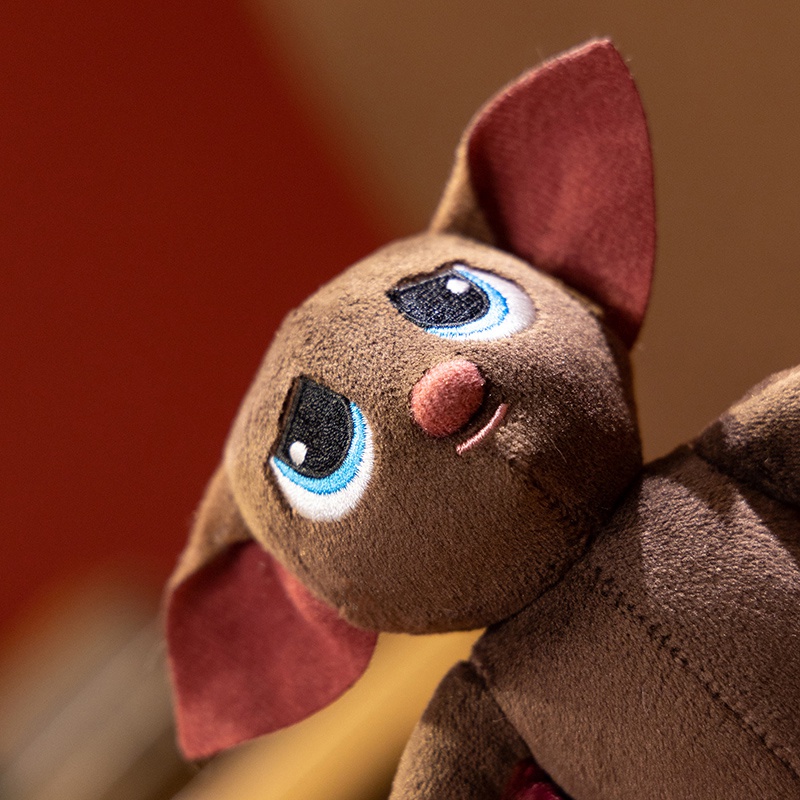
Visible: Broad wings and tall ears carry the outline.
Sample question: Do those features stay recognizable from the front, side and back in the intended pose?
Visible: The wings are shown spread out.
Sample question: Should they rest naturally or hold a pose? A photograph does not reveal the internal construction.
Visible: Stitched eyes, a raised nose and the ear angle define the face.
Sample question: Are eye spacing, expression and nose placement right at the chosen size?
Visible: The wings catch light differently from the body.
Sample question: Which physical fabric gives the desired contrast? The exact composition and finish need confirmation.
A useful starting point, not a stock catalog
These are discussion directions, not a promise of a particular fabric in stock. Exact fabric, color, filling and care requirements are confirmed for your sample.
Three ways to carry a surface detail
One character can combine methods. The right choice depends on the artwork, material, intended size and agreed sample result.
Size and pattern complexity · number of materials and colors · surface-detail setup · accessories and joins · quantity · packaging and review requirements.
We assess these together. There is no universal “embroidery surcharge” or fixed material price that applies to every character.
Put the decisions into practice
Existing product and process references help make the questions concrete. These are development notes, not client histories, test reports or a record of changes made by Kinhatch.
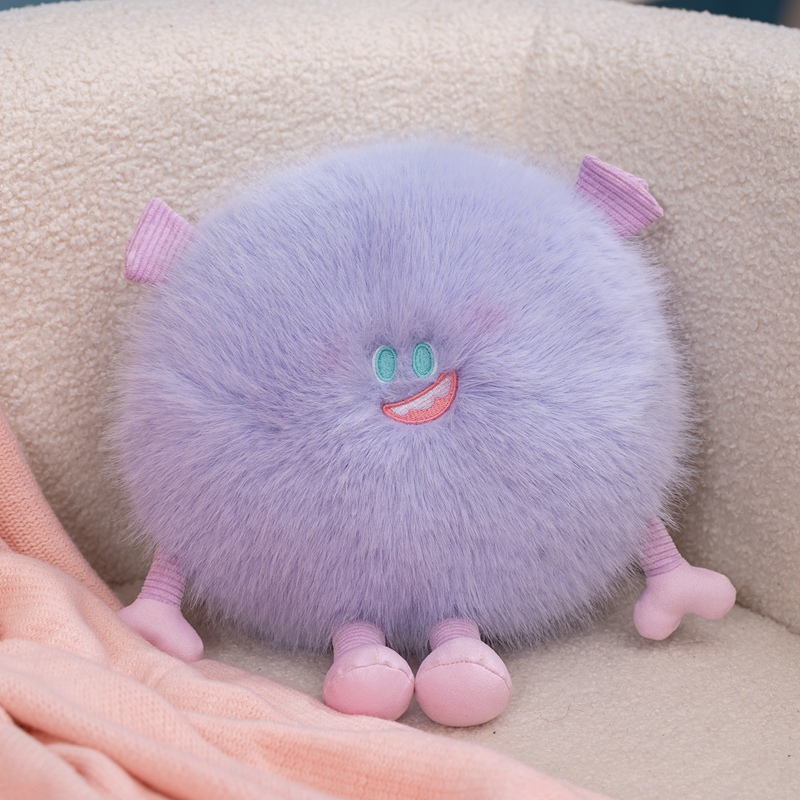
The long surface texture in this reference is part of the character. The development question is how the eyes and mouth remain visible at the chosen size.
Check the face after grooming, the edge of the silhouette and the way joined areas look. A photo does not identify the exact fabric specification.
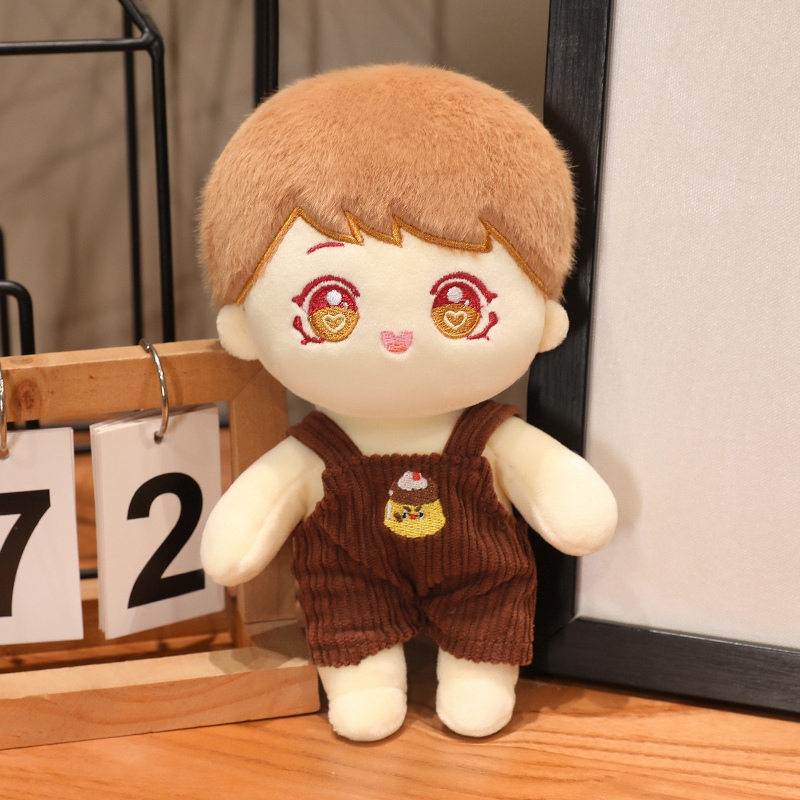
The face, hair outline and layered outfit each contribute to recognition in this finished-product reference. Their visual balance matters as much as individual details.
Compare the front expression and eye spacing, then check the hair from the side and back. Confirm whether clothing is fixed or removable; the photo alone does not establish that.
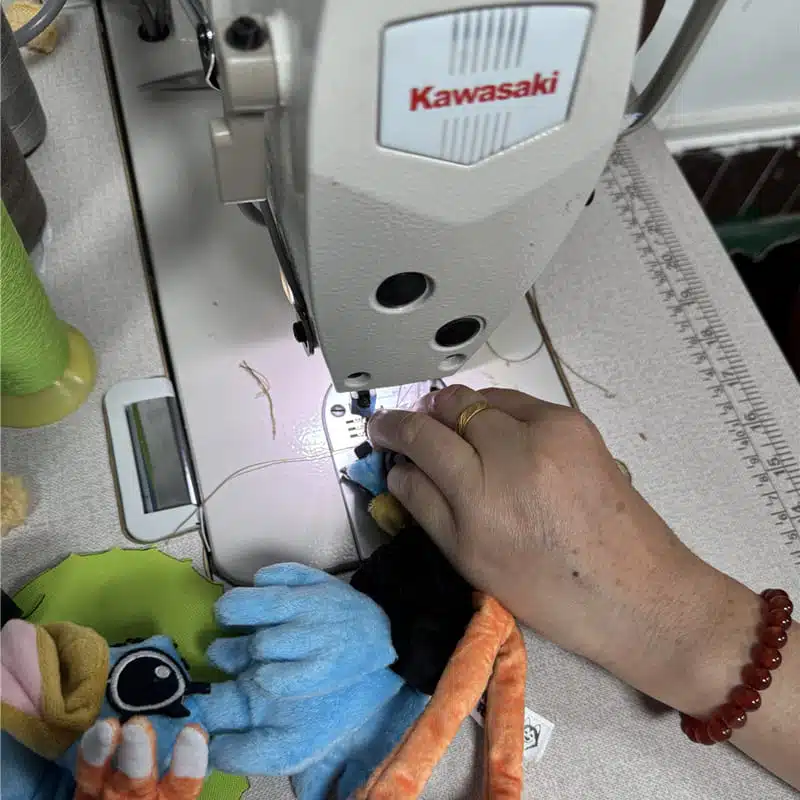
Wings, tails, ears and layered clothing introduce joins. Pattern choices affect where those joins appear and whether a part rests, bends or holds its pose.
Ask which parts need movement, which need support and where seams can sit without distracting from the character. Construction is confirmed for the particular sample.
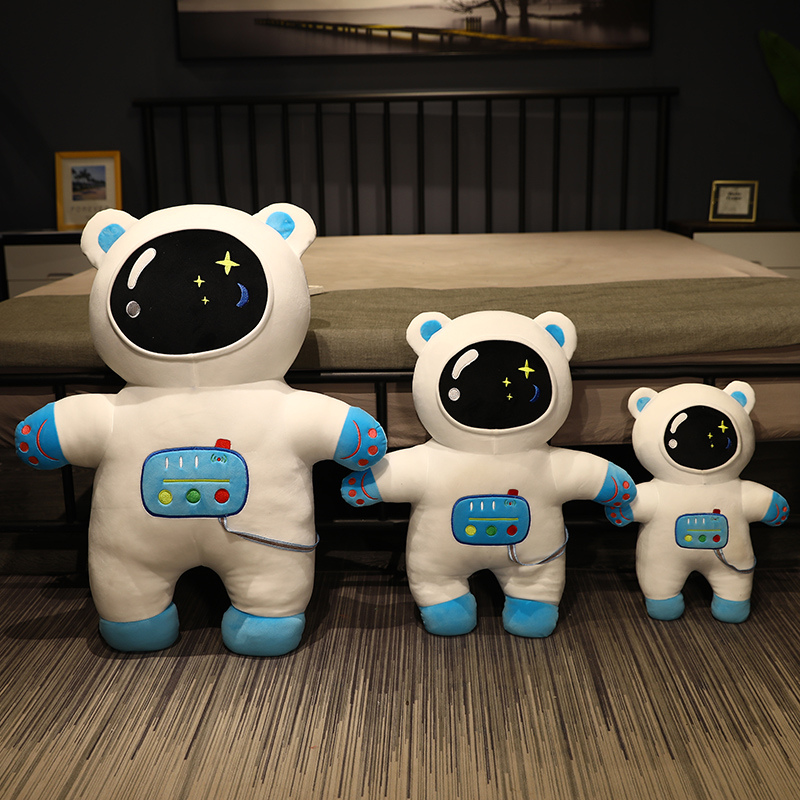
This mascot reference shows the same visual direction at different scales. It is useful for discussing how face details, accessories and proportions read as the size changes.
Confirm the measuring points and compare a detail at its intended size. The image does not establish available sizes, a minimum order or the cost of your design.
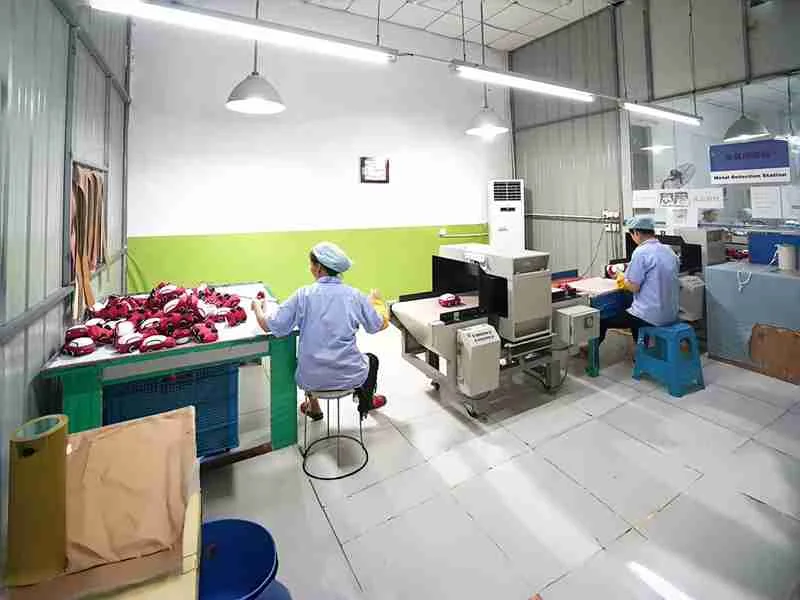
Appearance, seam finish, measurements and attachments need agreed review points. A process photo is not evidence that a particular product has passed testing.
Use the sample checklist to agree the visual review. Assess market- and age-specific testing separately; needle detection is not a substitute for all product testing.

A simple bag, a hanging tag and a retail box are different scopes. Packaging needs to suit the agreed product, presentation and shipping arrangement.
Confirm which labels, tags and packaging are included, their artwork versions and how accessories are protected. Do not assume a custom retail box is included.
What we will ask
No fixed material menu required
Soft and floppy, tidy and graphic, fuzzy and strange, small and collectible—language like this is useful. Technical choices can follow after the character and size are understood.
Start an inquiry