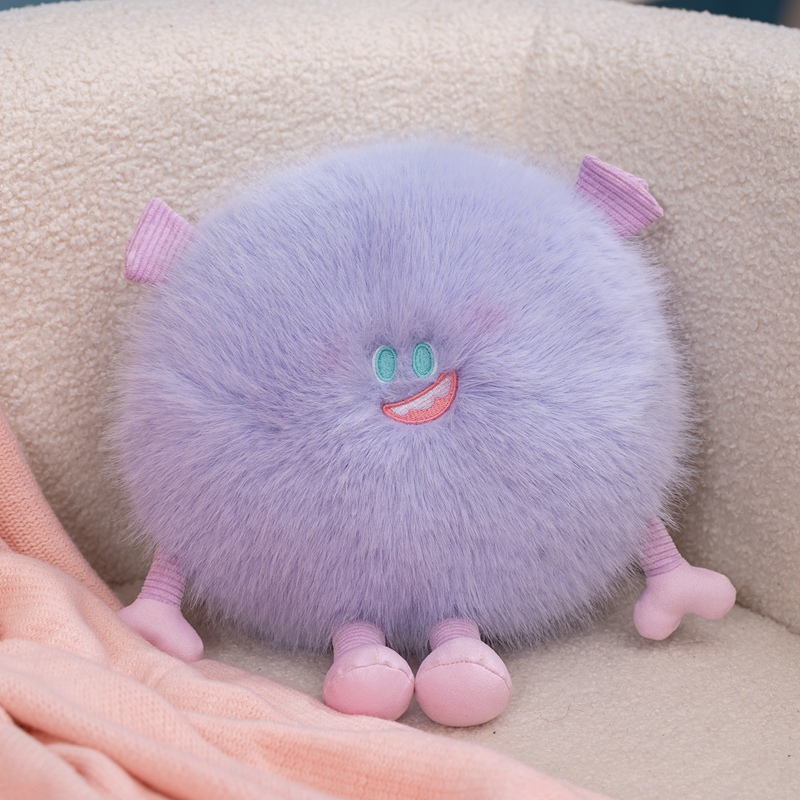
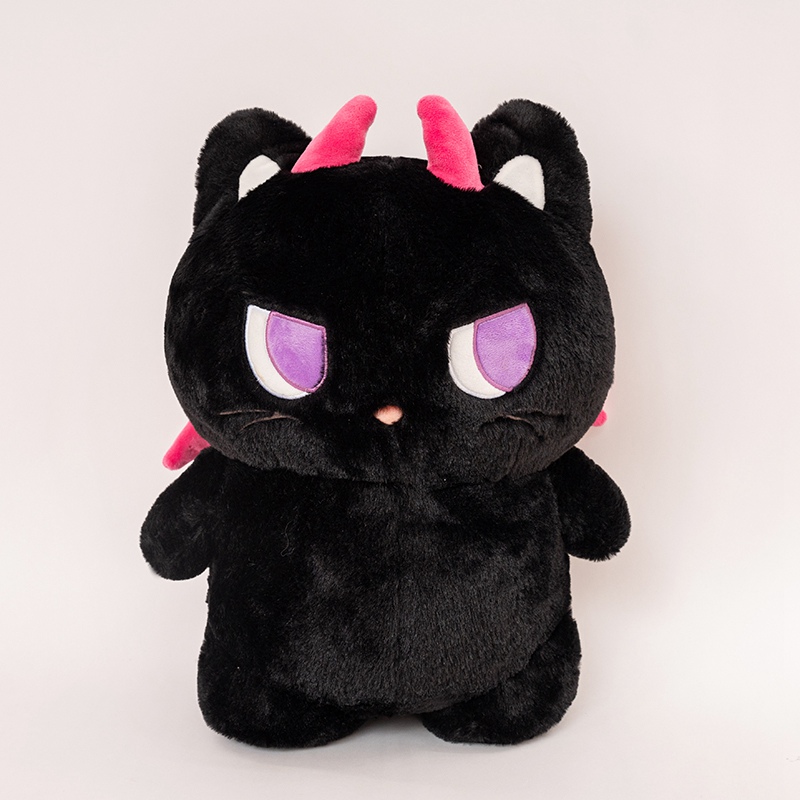
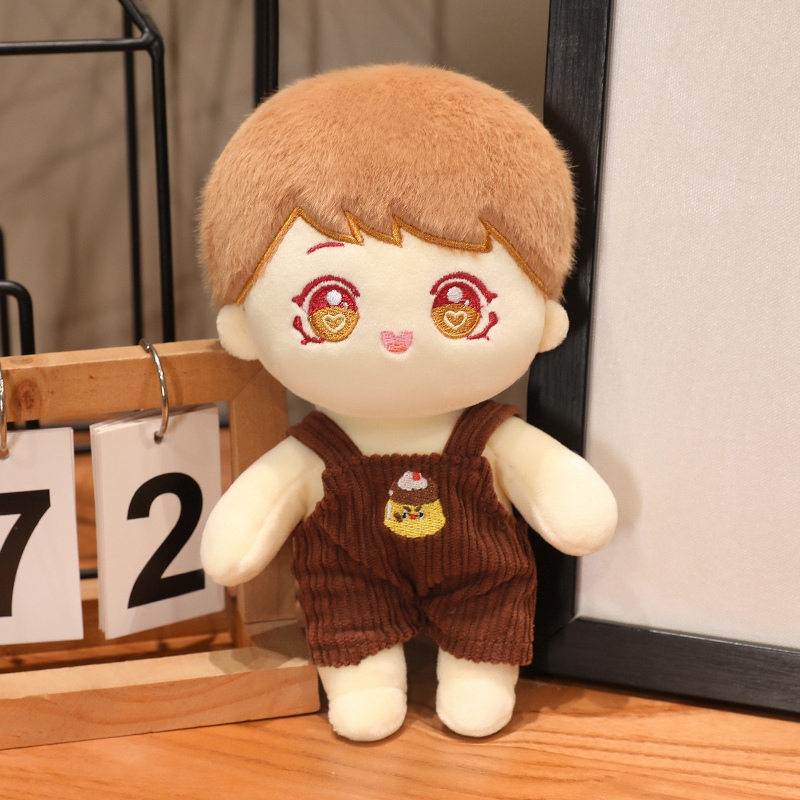
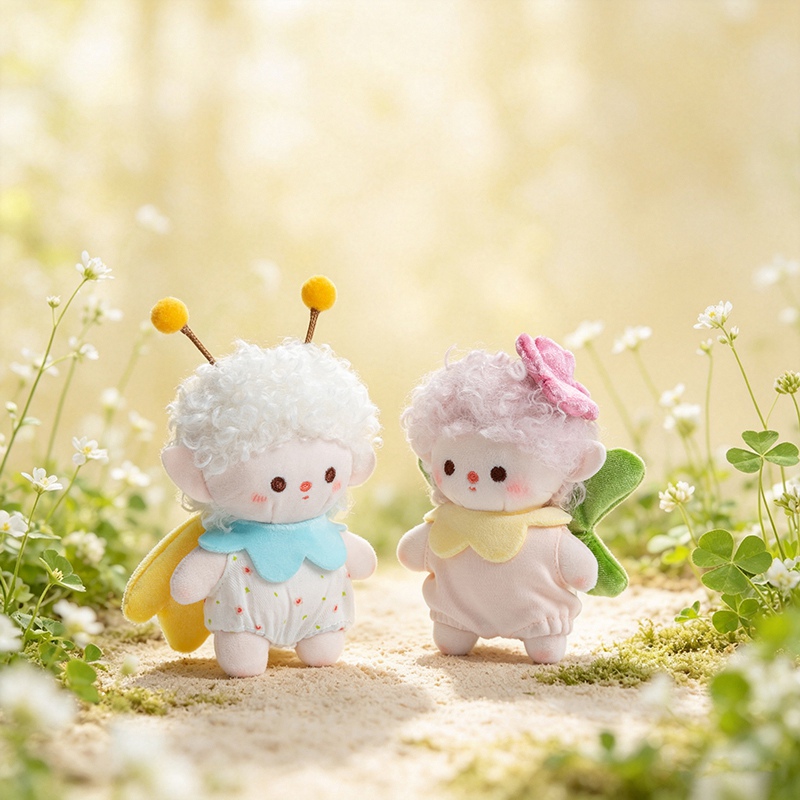
Orange & green bodies
Related textured-plush candidates
Keep a coherent family surface without assuming both colors stretch identically.
Trial before choosing
Texture, color in shared light, thickness and directional stretch.
Design & making notes / 03
Expressive mascot pair
Share the construction without flattening the differences in expression.
Free initial artwork review · first human reply within 1 business day
Before the construction
Compare the unchanged reference with the proposed drawing. Structure is useful only when it protects the character you recognize.
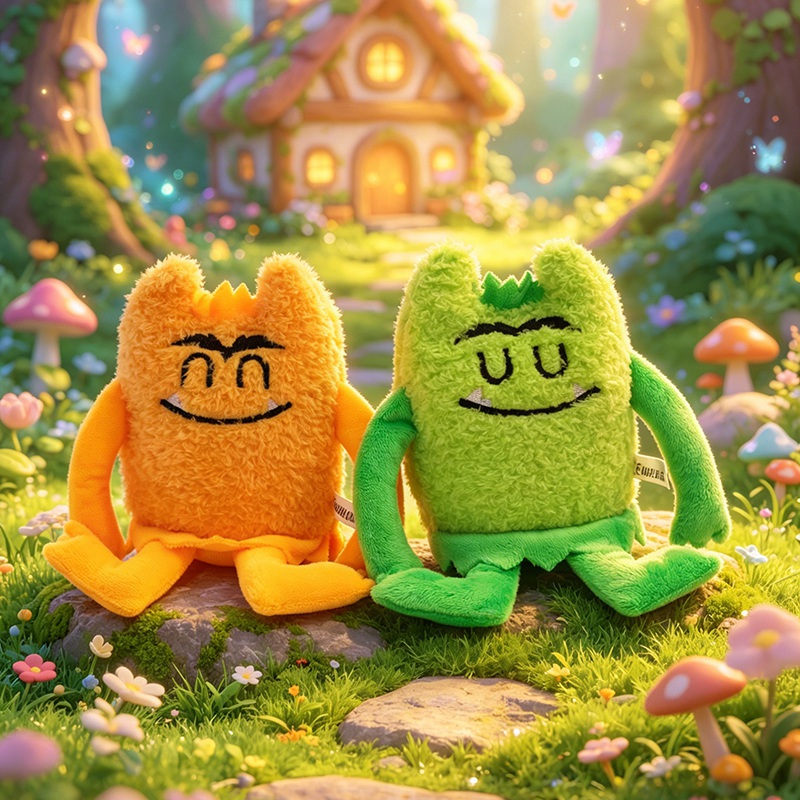
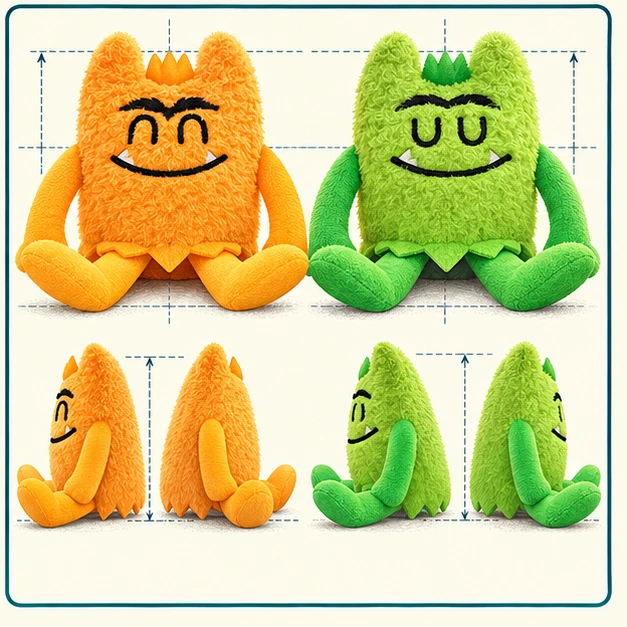
Views are cropped and scaled independently for reading, not measured overlays or an accuracy rating. These drawings communicate a development route; sampling still decides the final likeness.
01 / Look inside the idea
Four product-specific illustrations. Open a single drawing for a closer look, or compare the complete board.
Open all four drawings ↗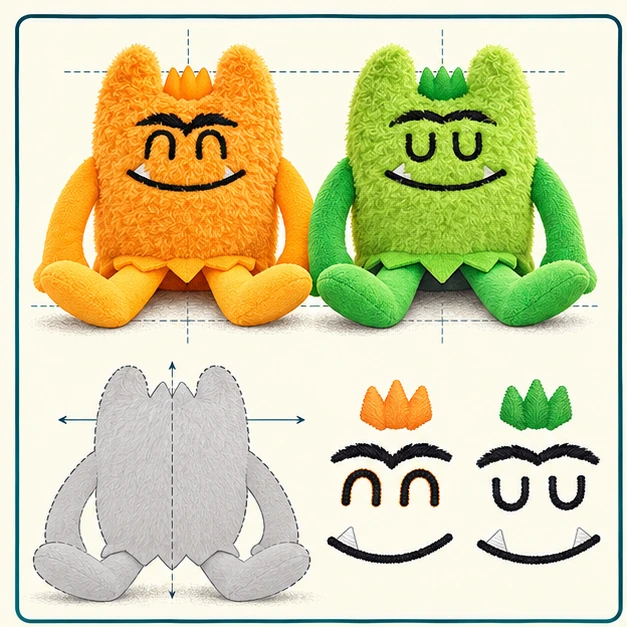
A common-body concept is compared with separate orange and green expression landmarks.
Other color variants remain separate evidence. They are not substituted for missing side or rear views of these two characters.
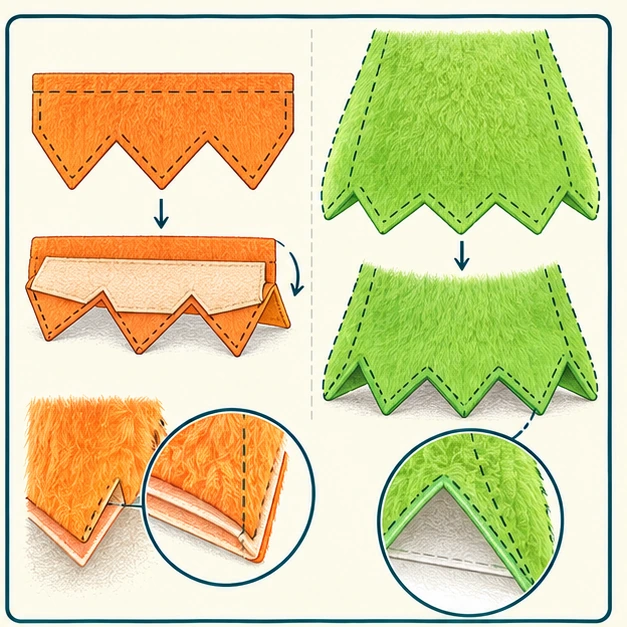
Compare an attached pointed trim with points formed in the shell outline before choosing one route.
The left separate-trim construction belongs to the selected main route. The right integrated-point edge is a separate alternative only; it would require redesigned mating geometry and must not be paired with the plain oval in drawing 03.
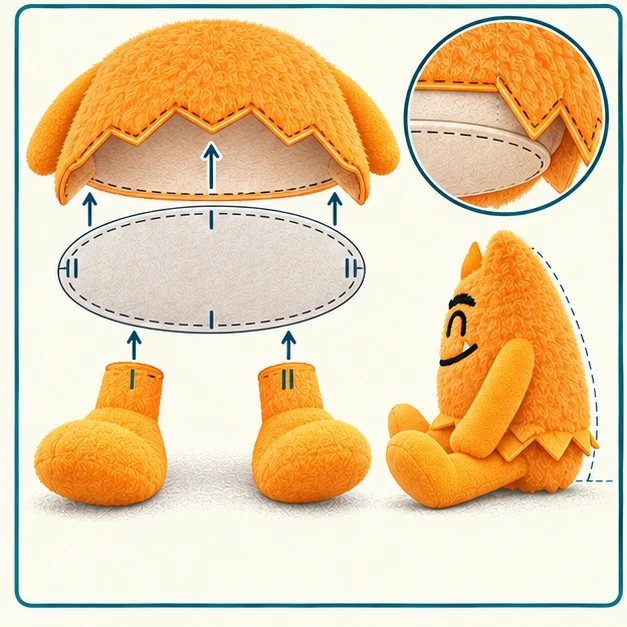
Lift the separate trim to reveal a continuous oval shell edge, matching base landmarks and paired front leg-root positions.
The inset distinguishes the dangling points from the smooth sewing line underneath. Single/double ticks distinguish mating landmarks; they are not measured notch positions. Locate the leg roots on the intended front base seam during pattern development. A separate rear gap remains necessary for turning.
Review both completed character concepts for expression, top crest, lower points and seated proportions.
Inspect shared scale and individual artwork together; neither a standing pose nor another color variant substitutes for the requested pair review.
AI-assisted concept illustrations, paired with product-specific design notes. Not production photographs, measured drawings or ready-to-cut patterns.
Solid outlines show conceptual cut edges; inset dashed lines indicate proposed stitching. A turning gap is a short unsewn section, not a virtual cutaway. Back views and internal details are development proposals, not unseen reference photographs. Diagrams explain relationships rather than executable geometry.
02 / Material map
These are candidate directions, not an inferred bill of materials or a stock promise.
Orange & green bodies
Keep a coherent family surface without assuming both colors stretch identically.
Texture, color in shared light, thickness and directional stretch.
Individual expressions
Preserve each character’s brow slopes, eye shapes and mouth rather than recoloring one face.
Both expressions on the selected texture before and after shaping.
Legs, feet & arms
Keep the long limbs flexible and the directional feet readable.
Left/right foot orientation, turning and root flexibility in the seated pose.
Crest, pointed trim & base
Separate identity features from the body’s resting surface while comparing seam bulk.
Point turning, layer thickness, crest position and contact with a flat surface.
03 / Construction choices
04 / Proposed making sequence
The practical sequence proposed for this design, with a checkpoint at every stage. This is not a record of past factory work.
Map each expression, central crest, lower points, arm length and foot direction; mark only genuinely shared features as common.
Review: The second character is not a recolored copy of the first face.
Prepare separate orange and green brow-eye-mouth artwork, then stitch each on its selected body fabric.
Review: The original personality remains clear at the proposed product scale.
Make the separate central crests, mirrored feet, long flexible legs and arms. Finish a separate pointed trim trial before assembling it around the selected smooth base join.
Review: Keep the central crest, pointed lower decoration and directional feet distinct; the integrated-point option is not added to the main route.
Mark front/back centers, quarter landmarks and paired leg roots on the smooth body-to-gusset sewing line. Set the completed legs at their designated front roots and join the oval base; the separate pointed trim covers the join from outside without defining its circumference.
Review: Body and oval sewing lines match; leg roots are mirrored and cannot twist. Decorative zigzags are not the structural mating edge.
After the smooth gusset join, turn through the reserved rear opening and fill in regions. Review base contact, forward leg direction and rear support together before closing.
Review: Do not repeat the base-joining operation or force a standing pose; the trim points remain outside the structural seam.
Compare front, side and rear views under one camera setup, then review both resting on the same flat surface.
Review: Common proportions coexist with different faces, intact top crests and matching pointed-edge logic.
05 / Sample review
Appearance and function checkpoints for this concept. They do not establish product safety compliance or replace any required testing.
Brow slopes, eye shapes and mouth lines match their individual artwork versions.
The central crest and lower-edge points agree across component, process and finished-view illustrations.
Left/right feet are deliberate, leg roots are not twisted, and the base supports the selected resting direction.
Other colors do not supply invented rear views or unconfirmed shared-pattern claims.
No exact size, cutting pattern, material composition, filling weight or test result is reconstructed from this photograph.
General methods inform the proposal. These links do not establish the pictured product’s manufacturing history or any Kinhatch certification.
Terminology, darts, curved seams, fabric direction and appliqué principles; not a pattern for any pictured character.
Examples of shaping, seam-line alignment, captured attachments and rear turning openings. Its specific shapes and dimensions are not transferred.
Fabric-supplier guidance on pile, stretch, handling and seam control; product-specific fabric settings require trials on the chosen material.
How fabric stretch and filling interact with a doll’s head shape; filling choices must be compared on the proposed shell.
Your character comes next
Across your character series, which body features can be shared and which expressions or poses must remain individual?
Send your artwork for a free initial review. First human reply within 1 business day; physical sampling is a separate paid step.
Explore another construction challenge