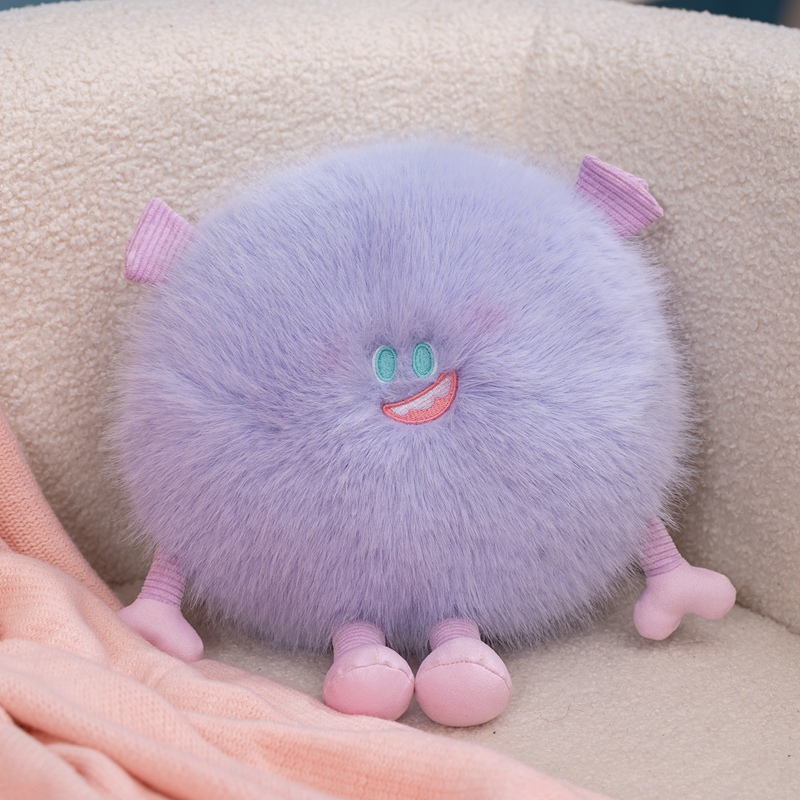
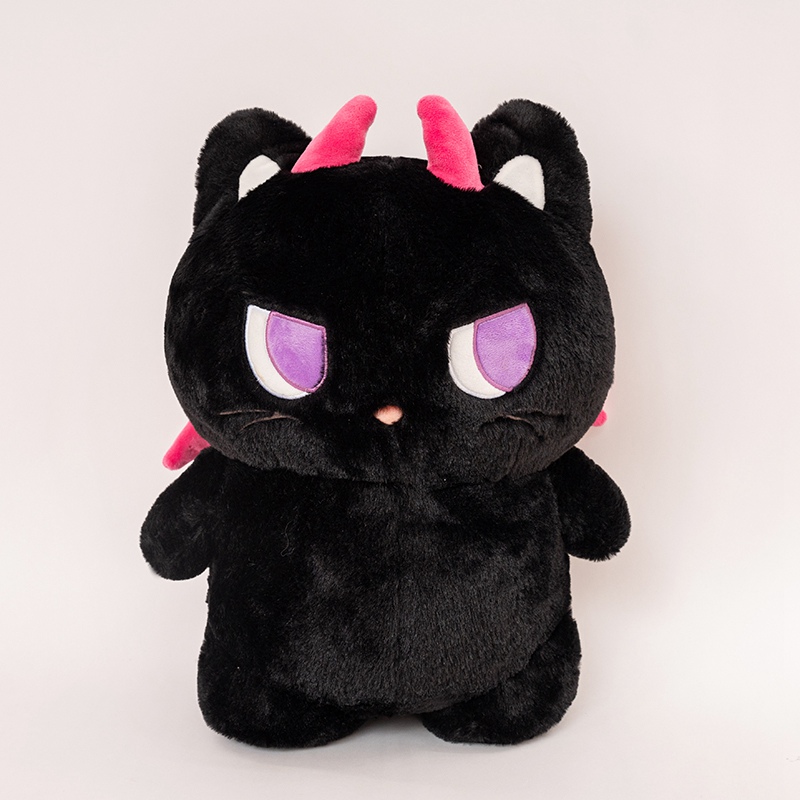
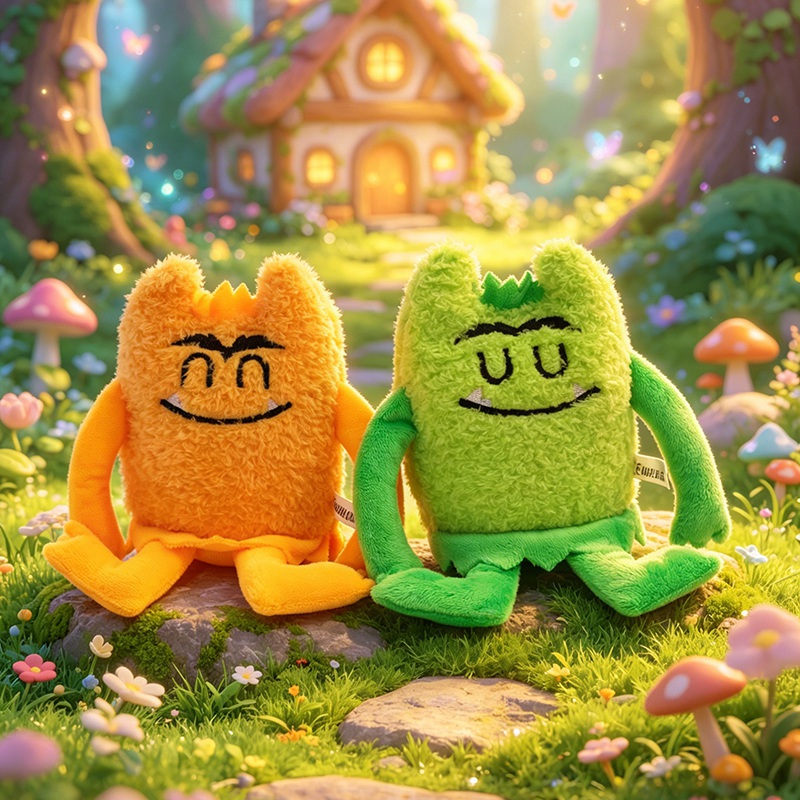
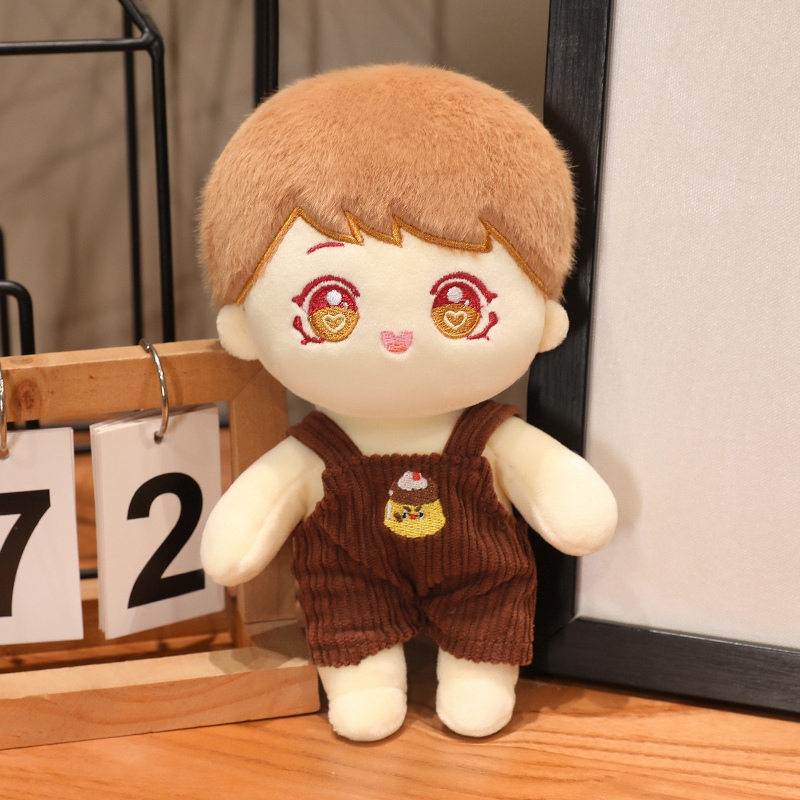
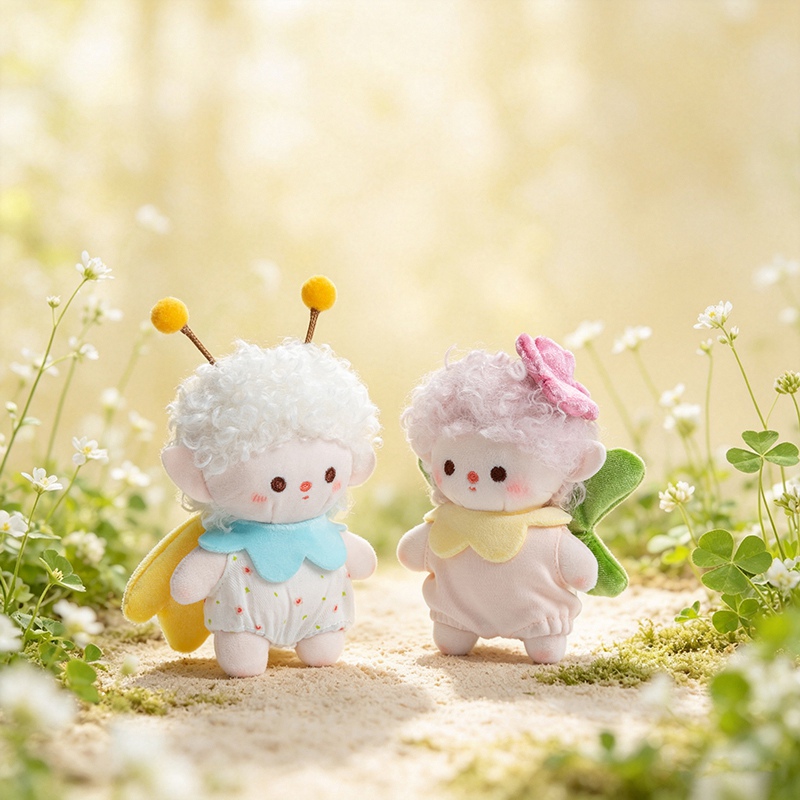
Heads & bodies
Short-pile pink, white, yellow, brown and green candidates
Keep small faces and color blocks readable while controlling thickness for turning.
Trial before choosing
Actual-size detail, seam layers, pile direction and shell access.
Design & making notes / 06
Flower & bee charms
Keep the tiny character readable while making the layers and hanging connection work.
Free initial artwork review · first human reply within 1 business day
Before the construction
Compare the unchanged reference with the proposed drawing. Structure is useful only when it protects the character you recognize.
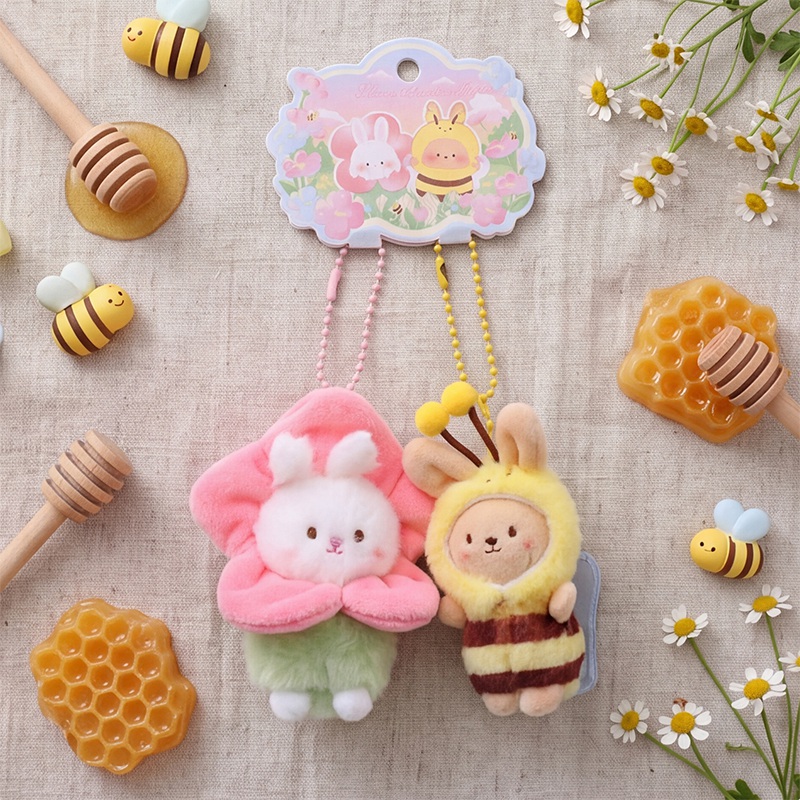
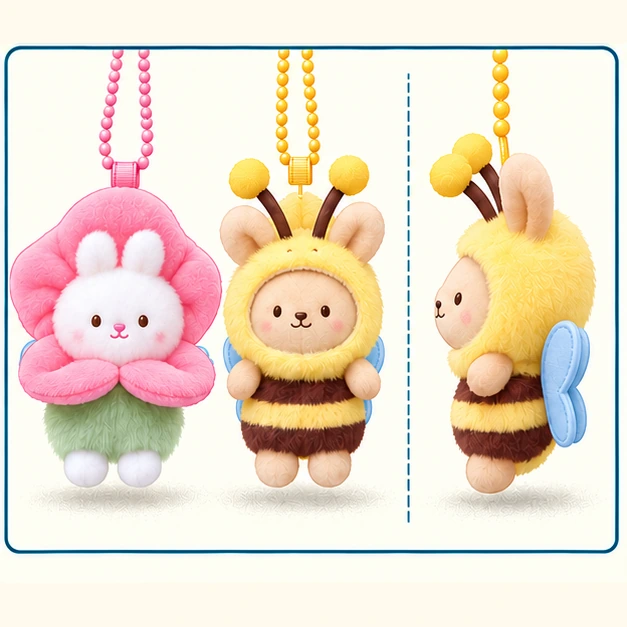
Views are cropped and scaled independently for reading, not measured overlays or an accuracy rating. These drawings communicate a development route; sampling still decides the final likeness.
01 / Look inside the idea
Four product-specific illustrations. Open a single drawing for a closer look, or compare the complete board.
Open all four drawings ↗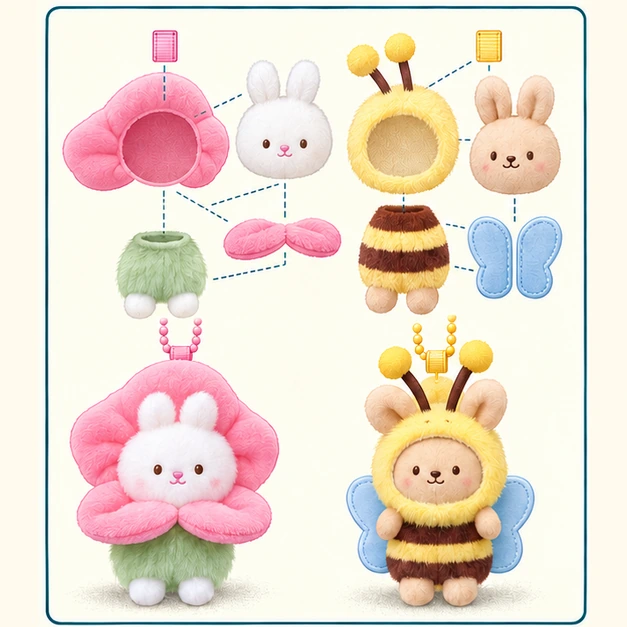
Separate the flower character’s face, ears, petals and green body from the bee hood, stripes, antennae and blue wings.
The top flower hood and independent lower petals are separate groups, not duplicate complete flowers. The exposed blue wing in the original establishes a back accessory, not its full shape. The large isolated blue components show proposed geometry only; compare the restrained front exposure in drawing 04.
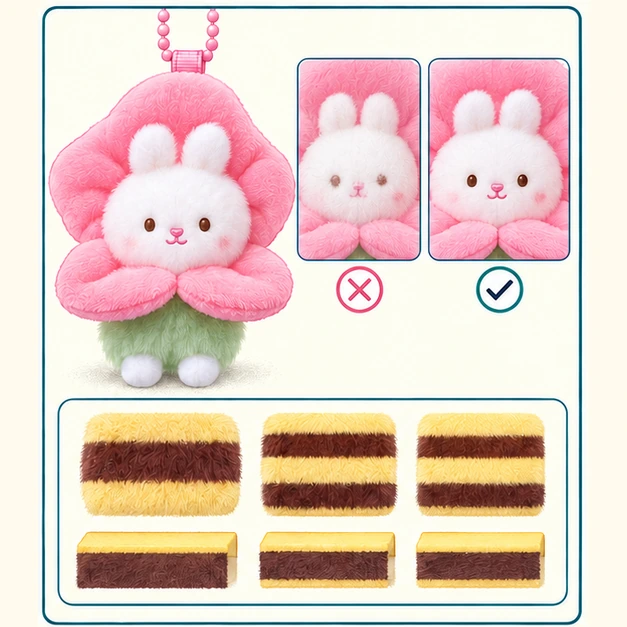
Compare a direct reduction with a considered detail layout for tiny faces, petal edges and striped body panels.
Reconsider seam layers, embroidery detail and hardware independently. The cross and tick illustrate relative readability only, not completed stitch tests, safety approval or measured dimensions for the original.
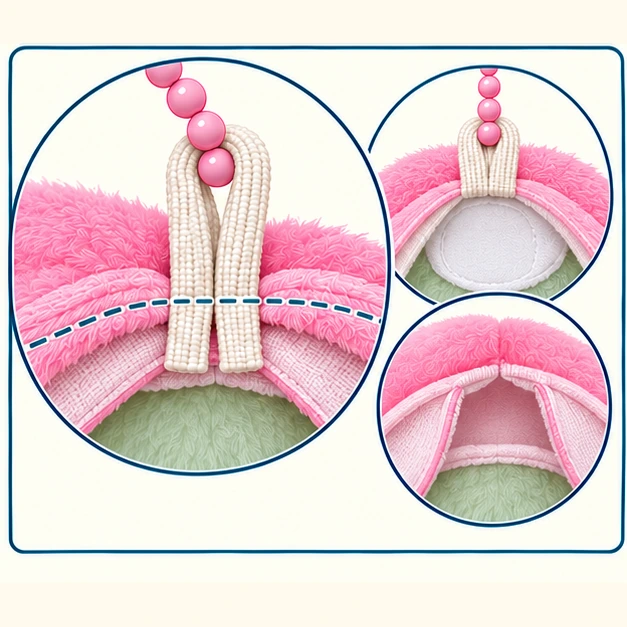
The enlarged cutaway traces both soft loop ends past the permanent sewing line through the two shell layers; optional backing and a separate turning gap are distinguished.
The large view is an enlarged structural cutaway, not surface decoration: the permanent join catches both loop ends and both shell layers. The small views distinguish the turned connection and a different rear opening. The backing is a trial option. This drawing specifies neither a force rating nor a verified stitch parameter.
Front views keep only a small glimpse of blue wing behind the bee character; the separate side study explains proposed rear geometry.
The reference does not reveal a full wing outline. Expanded wing geometry belongs to the separate construction study, not a claim about the original front silhouette. Inspect loop roots and hanging balance separately from physical attachment-strength checks.
AI-assisted concept illustrations, paired with product-specific design notes. Not production photographs, measured drawings or ready-to-cut patterns.
Solid outlines show conceptual cut edges; inset dashed lines indicate proposed stitching. A turning gap is a short unsewn section, not a virtual cutaway. Back views and internal details are development proposals, not unseen reference photographs. Diagrams explain relationships rather than executable geometry.
02 / Material map
These are candidate directions, not an inferred bill of materials or a stock promise.
Heads & bodies
Keep small faces and color blocks readable while controlling thickness for turning.
Actual-size detail, seam layers, pile direction and shell access.
Petals & blue wings
Preserve the flower outline and the bee character’s back accessory without excessive bulk.
Petal groups traced from the original, turned edges and wing-root placement.
Bee stripes
Small-scale seam loss and added appliqué thickness require different trade-offs.
Stripe registration, body softness and handling at the intended size.
Hanging attachment
Carry the attachment through both loop ends into a permanent shell join rather than a decorative petal or antenna.
Turning access, root stitching, hanging balance and the appropriate physical attachment checks.
03 / Construction choices
04 / Proposed making sequence
The practical sequence proposed for this design, with a checkpoint at every stage. This is not a record of past factory work.
Set the target size and mark each face, petal group, ear, antenna, blue wing and dedicated hanging point.
Review: The flower and bee parts remain separate; group variants do not supply missing views.
Use actual-size stitch and edge samples, then choose joined stripe panels or appliqué based on readability and layers.
Review: A clear enlarged screen image does not replace a readable small stitched face.
Make the flower petals and ears separately from the bee hood, antennae, body and blue back wings; retain individual turning access.
Review: No flower/bee hybrid parts and no disappearing blue wings.
Position both loop ends in the designated permanent shell seam, trial internal backing if needed, and fix the blue-wing roots at their planned rear-body join.
Review: Temporary basting locates parts; the final sewing line must capture both loop ends.
Check turning access before adding small amounts of filling, keep faces and color blocks clear, then close the reserved filling opening.
Review: The loop attachment is not the filling gap and roots do not rely on filling friction.
Inspect front, side and rear views, then let each charm hang freely to observe twisting or forward tilt.
Review: A balanced hanging photo is not an attachment-strength test; the intended-use checks are recorded separately.
05 / Sample review
Appearance and function checkpoints for this concept. They do not establish product safety compliance or replace any required testing.
Flower groups, ears, antennae, faces, stripes and blue bee wings agree with their own original reference.
The main connection catches both ends into the shell; the load path does not terminate at a decoration.
Faces, stripe decisions, seam layers and turning access are reviewed at the chosen physical size.
Record twisting or tilt without treating a pleasing hanging view as proof of attachment strength.
No exact size, cutting pattern, material composition, filling weight or test result is reconstructed from this photograph.
General methods inform the proposal. These links do not establish the pictured product’s manufacturing history or any Kinhatch certification.
Terminology, darts, curved seams, fabric direction and appliqué principles; not a pattern for any pictured character.
Fabric-supplier guidance on pile, stretch, handling and seam control; product-specific fabric settings require trials on the chosen material.
Panel marking and seam inspection principles; suggested armatures, pellets and ambiguous seam parameters are not adopted automatically.
A different charm project showing a folded hanging loop positioned before shell closure and caught in the permanent seam; no attachment-strength rating is inferred.
Your character comes next
Will your character hang from a bag, serve as a key charm or sit in a collection, and which tiny details matter most at your intended size?
Send your artwork for a free initial review. First human reply within 1 business day; physical sampling is a separate paid step.
Explore another construction challenge